Die krasseste Segelerfahrung meines Lebens machte ich ebenfalls während der Baltic 500. Zwischen Kopenhagen und Læsø, eine dänische Insel in der nördlichen Ostsee, liegt das Kattegat. Mit dem starken Südwind, den wir hatten, baut sich dort eine fiese steile Welle auf. Durch den Durchzug einer Kaltfront war an dem Abend der Himmel von einer dichten Wolkendecke bedeckt, die während der Nacht weder Mond- noch Sternenlicht durchließ. Da wir nur einen Gennaker hatten, der für den Wind deutlich zu groß war, und für die Nacht außerdem Böen mit 50kts vorhergesagt waren, konnten wir nur unter Groß und Fock segeln, was auf Vorwindkurs sehr instabil ist. Nach der Halse konnten wir die nächste Bahnmarke nordöstlich von Læsø anliegen, aber nur, wenn wir sehr tief gefahren sind. Wir versuchten also so tief wie möglich zu steuern, auch um Druck im Segel loszuwerden. Wir mussten echt aufpassen, dass man dabei nicht zu sehr abfällt, das Großsegel durch den Velocity Header in die Mitte kommt, sich ggf. noch im Backstag verhakt und man eine sehr unschöne Patenthalse fährt.
Max steuerte während es dunkel wurde. Wegen der Wolken war es stockfinster und ich bekam nur mit, wieviel er Ruder geben musste, um das Boot auf Kurs zu halten. Man konnte die Wellen nicht mehr sehen, weshalb er sich nur auf die Instrumentenanzeigen und sein Steuergefühl verlassen konnte. Außerdem war es kalt, es regnete, das Steuerrad war nass und rutschig – ich war mir langsam nicht mehr sicher, ob ich mir zutraute, selbst auch zu steuern. Mir war aber auch klar, dass Max nicht alleine die ganze Nacht durch steuern konnte. Zwar wagte keiner von uns beiden den anderen an Deck alleine zu lassen und an erholsamen Schlaf war an Deck nun wirklich nicht zu denken, aber Max würde zumindest irgendwann mal die Augen zu machen müssen und etwas entspannen. Und ich würde ja wohl hoffentlich besser steuern als er im Sekundenschlaf.
Die L30 hat zwei Steuerräder, also schlug Max vor, dass wir eine Zeit lang zusammen steuern, sodass ich mich mit der Situation vertraut machen konnte. Das war eine sehr gute Idee. Zwar war mein Adrenalinspiegel trotzdem sicherlich bei 100%, aber das machte mich wach und fokussiert, brachte mich in einen Flow-Zustand. Ich hatte keine Panik und vom Steuern wurde mir auch wieder warm.
Ich versuchte gar nicht erst aktiv die Wellen zu surfen, wie ich es bei Tageslicht gemacht hatte sondern, so tief aber auch sicher wie möglich zu fahren. Trotzdem hatten wir so viel Wind, dass das Boot die meisten Wellen ganz von alleine surfte und ich ganz nebenbei einen Speedrekord von 16kts aufstellte. Nur leider bekam ich das in dem Moment gar nicht mit, weil ich wie gebannt auf die Anzeige für den Winkel zum Wind starrte…
Letztendlich haben wir in der Nacht keine Steuerfehler gemacht und erreichten Læsø wohlbehalten. Wir hatten sogar um die 4 Meilen aufgeholt und dank Max war ich um eine aufregende Erfahrung reicher.
English Text
Blind through the Storm
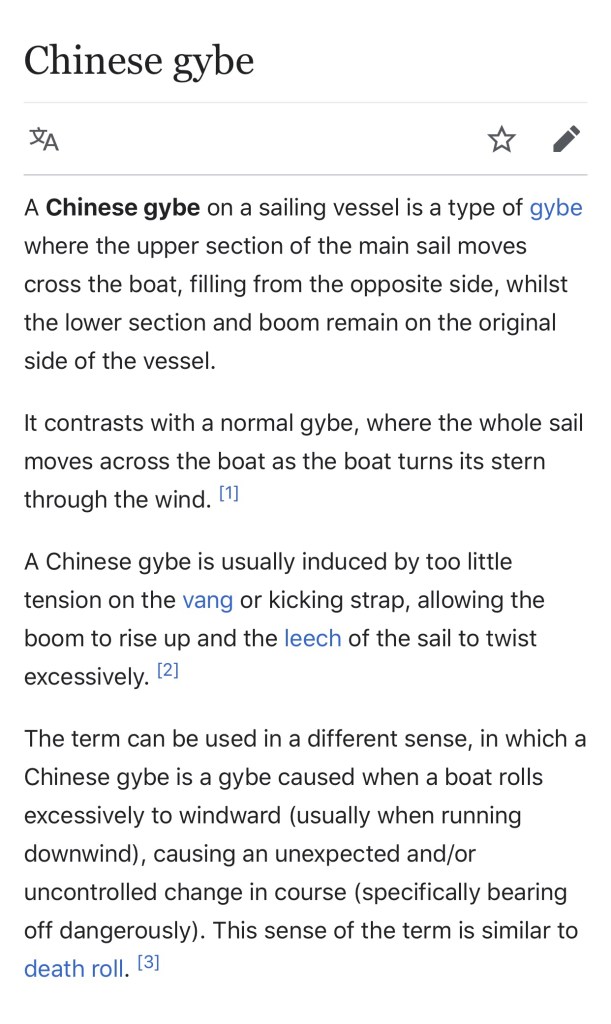
The most astounding sailing experience of my life I also made during the Baltic 500 regatta. The Kattegat is a part of the Baltic Sea, located between Copenhagen and Læsø, a Danish island in the northern Baltic Sea. With the strong southerly wind that we had, a nasty steep wave builds up there. Due to the passage of a cold front, the sky had a dense cloud cover that did not allow moon or starlight shining through during the night. We only had one Gennaker, which was way too big for the wind, also there were gusts of 50kts predicted for the night, so we could only sail with mainsail and jib, which is very unstable going downwind. After gybing we were able to lay the next mark northeast of Læsø (which was still like 80 miles away), but only when we were pointing extremely low. We always tried to bear away as much as possible, also to get rid of pressure in the sails. But we really had to be careful that we did not oversteer and possibly had the mainsail being pushed to the middle of the deck by a velocity header. If the mainsail was also to get stuck in the backstay the boat could do a „Chinese“ gybe and we would find ourselves in a very uncomfortable position.
Max was steering during twilight. Later it became completely dark and I could barely see anything but how much he had to push the rudder to keep the boat on track and under control. You couldn’t see the waves anymore, so he could only rely on the instrument displays and his feeling for the boat.
Also it was cold, it was raining, the steering wheel was wet and slippery – slowly I started to doubt whether I would be able to steer the boat safely when it was my turn. But I also knew that Max wouldn’t be able to stay awake and attentive all night. And although neither of us dared to leave the other alone on deck and it was basically impossible to get some restful sleep out there, at least at some point Max would have to sit down, close his eyes and relax. And then I would definitely be doing a better job steering than him, falling asleep every second.
The L30 has two steering wheels, so Max suggested that we steer together for a while so I could familiarize myself with the situation. That was an incredibly good idea. Although my adrenaline level was certainly at 100%, that just made me awake and focused and put me in a flow state. I didn’t panic and my body got warmed up again.
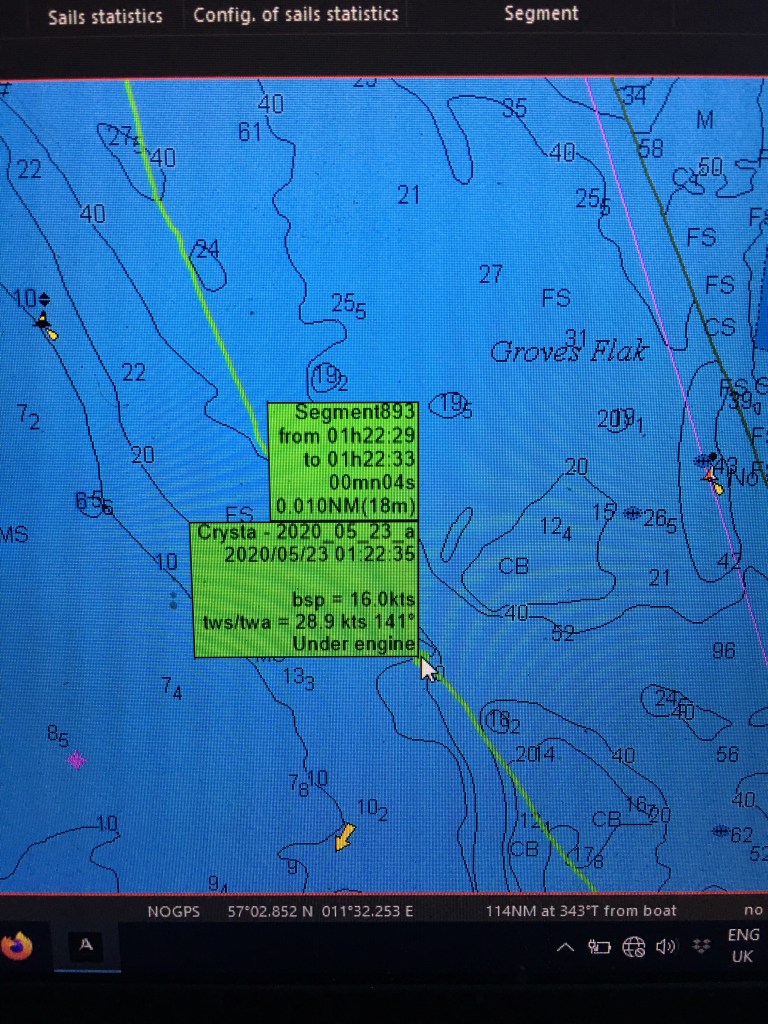
I didn’t even actively try to surf the waves, as I had done during daylight, I only tried to steer as low as I trusted my abilities. Nevertheless, we had so much wind that the boat surfed most of the waves on its own and I set a speed record of 16kts on the way. And because I was staring at the display with the true wind angle I wasn’t even noticing…
In the end, Max and I didn’t do any steering mistakes that night, so we made it to Læsø safely. We even had caught up around 4 miles and thanks to Max I was enriched by a new exciting experience.
 segellena